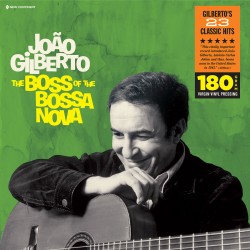
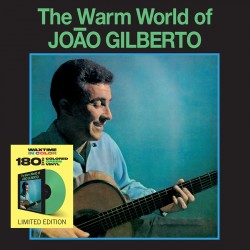
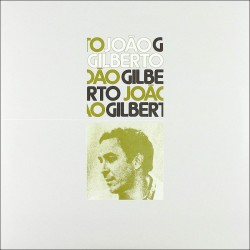
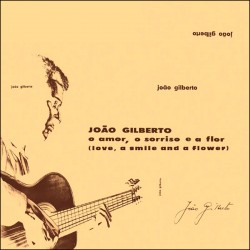
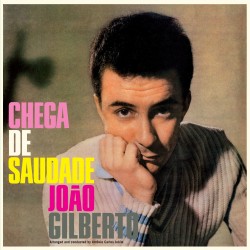
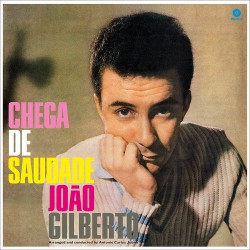
List of products by artist Joao Gilberto
Introduction
In the world of Brazilian music, there are giants who rise with the power of an orchestra — and João Gilberto is one of them. He did not need to shout to be heard; his voice (soft as the tropical breeze) and his guitar (a rhythmic extension of himself) created a sound universe that transformed popular music forever.
He was the architect of a style that revolutionized not only samba, but also jazz and music worldwide. João Gilberto was a mystic of music, a purist obsessed with the perfection of rhythm and harmony who took bossa nova to its highest expression. For him, music was a search for truth and an exploration of beauty in its purest form.
Biography
João Gilberto Prado Pereira de Oliveira was born on June 10, 1931, in Juazeiro, Bahia, Brazil, and passed away on July 6, 2019, in Rio de Janeiro.
His childhood unfolded in a middle-class home where music was part of daily life, though not conceived as a professional career. From an early age, he showed a natural inclination for rhythm and melody, forming vocal groups with schoolmates and teaching himself guitar, despite his father’s initial disapproval.
At the age of 14, he received his first guitar as a gift from his grandfather, and with it he began to explore a sonic universe that soon became an obsession. In 1950, he moved to Rio de Janeiro, briefly joining the vocal group Garotos da Lua. However, his perfectionism and relentless search for his own style led him away from the group and into a period of creative isolation.
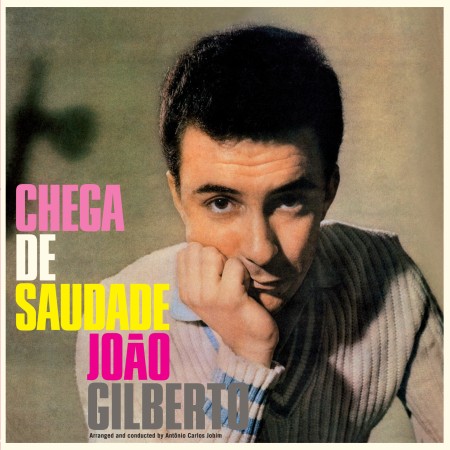
For years, confined in modest rooms, João Gilberto worked in silence, refining a guitar style that challenged the conventions of traditional samba. His vision crystallized in 1958 with the recording of “Chega de Saudade”, a song composed by Tom Jobim and Vinicius de Moraes, but transformed by Gilberto’s intimate and revolutionary interpretation.
With his low voice and syncopated guitar rhythm, he gave birth to bossa nova, a genre that distilled the essence of samba and wrapped it in an atmosphere of sophistication and melancholy.
In the following years, Gilberto consolidated his style with albums such as “O Amor, o Sorriso e a Flor” (1960) and “João Gilberto” (1961), which became the canon of bossa nova. In 1962, he took part in the historic “O Encontro” concert in Copacabana alongside Tom Jobim and Vinicius de Moraes, the only time the three icons shared a stage.
That same year, he moved to the United States, where he collaborated with musicians like Stan Getz and Charlie Byrd. The album “Getz/Gilberto” (1964), which included the celebrated “Garota de Ipanema” (The Girl from Ipanema), catapulted him to international fame and made him an ambassador of Brazilian music around the world.
Although his personal life was marked by isolation, family disputes, and unwanted fame, his commitment to music was absolute. He recorded only a few albums, but each was polished with devotion.
João Gilberto passed away in 2019, but his music remains alive — not as an echo of the past, but as a constant presence whispering beauty in every chord.
Musical Influences
The foundation of João Gilberto’s music was undoubtedly traditional Brazilian samba, which he admired for its rhythmic complexity. However, he was dissatisfied with the way samba singers often shouted the lyrics.
In search of a new path, he drew inspiration from American jazz singers, particularly the smooth voice and melodic phrasing of Frank Sinatra and Nat King Cole. He was also influenced by classical music, absorbing its discipline and harmonic structure.
The combination of jazz sophistication, samba complexity, and the purity of his voice gave birth to bossa nova, a genre that is at once simple and profoundly sophisticated.
Performance Collaborators
Although João Gilberto was known for his solitary nature, his collaborations were essential in bringing bossa nova to the world stage.
The most notable and successful of these was his partnership with jazz saxophonist Stan Getz. Together, they recorded the iconic album “Getz/Gilberto” (1964), which became a global phenomenon and introduced bossa nova to American audiences. This record, which also featured Gilberto’s then-wife Astrud Gilberto, included the famous “The Girl from Ipanema”, a landmark in music history.
Gilberto also collaborated with other jazz greats such as Herbie Mann and Stan Kenton, proving his ability to merge Brazilian sound with the language of jazz.
Discography
João Gilberto did not produce a large number of albums, but each one is a polished jewel, crafted with meticulous attention to detail. His most representative works include:
- Chega de Saudade (1959)
- O Amor, o Sorriso e a Flor (1960)
- João Gilberto (1961)
- Getz/Gilberto (with Stan Getz) (1964)
- João Gilberto en México (1970)
- João Gilberto (“White Album”) (1973)
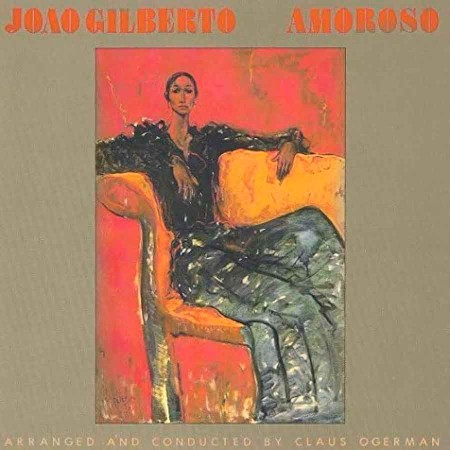
- Amoroso (1977)
- Brasil (with Caetano Veloso, Gilberto Gil & Maria Bethânia) (1981)
- João (1991)
- João Voz e Violão (2000)
Most Famous Songs
The songs of João Gilberto are known for their deceptive simplicity, within which lies their depth. Some of his most famous interpretations include:
Chega de Saudade
Translated as “No More Blues”, this track is the cornerstone of bossa nova. His 1958 interpretation is a pivotal moment in music history, featuring subtle guitar rhythm, whispered vocals, and innovative phrasing.
Desafinado
One of the most beloved bossa nova songs, “Desafinado” carries an irony that gently mocks those who fail to understand the beauty of harmony.
Garota de Ipanema
While the version by Stan Getz and Astrud Gilberto is the most famous worldwide, João Gilberto’s original interpretation defines the essence of the song. His minimalist style and rhythmic guitar touch created the perfect groove for the melody.
The music of João Gilberto, the genius who found greatness in silence, is at Jazz Messenger Music
João Gilberto taught us that to be a giant in music, sometimes all you need is a voice, a guitar, and a heart full of truth.
To immerse yourself in the intimate universe of his work and discover why he is considered the father of bossa nova, we invite you to explore his discography at Jazz Messenger Music, a platform dedicated to true jazz lovers and connoisseurs.