List of products by artist John Eaton
Introduction
Some musicians improvise, others interpret — but John Eaton does both with a unique particularity, turning every note into a story. In his hands, and through the piano, jazz ceases to be just a style and becomes a language that connects deeply with the spirit of the blues.
Without a doubt, John Eaton is more than a pianist — he is an interpreter who turns music into conversation. His work invites listeners to pay attention, to understand context, and to delight in detail.
Biography
John Livingston Eaton was born on May 29, 1934, in Washington, D.C., into a family that valued culture and music. His father, a journalist by profession, played the piano every evening, inspiring in John an early curiosity for jazz. This domestic influence proved decisive — the piano became his tool for exploration and expression.
He studied at Yale University, graduating in 1956, and during his time there he joined the St. Anthony Hall literary fraternity, which strengthened his connection with storytelling and cultural history. Later, he studied with the classical master Alexander Lipsky, who instilled in him the technical rigor that Eaton would later apply to the popular repertoire.
By the late 1950s, he was performing professionally in the Washington, D.C. club circuit, especially at Blues Alley, where he played for three years as part of the house band, accompanying touring artists. This experience gave him the versatility that would make him one of the most sought-after pianists in the region.
Throughout his career, Eaton has combined performance and education, offering lectures at universities, museums, and cultural centers, where he explains the evolution of jazz and American popular music with both clarity and enthusiasm. His approach blends erudition with warmth, earning him recognition as a beloved communicator among audiences of all kinds.
Today, he remains active in the jazz world — and his legacy already forms part of the American musical heritage.
Musical Influences
John Eaton’s training is hybrid: on one hand, he inherited classical technique from Alexander Lipsky, and on the other, the oral tradition of jazz and blues he absorbed as a child. This combination allowed him to craft a style that respects structure without losing spontaneity.
Among his influences are George Gershwin, Cole Porter, Fats Waller, and Duke Ellington — composers whom Eaton not only performs but also studies and discusses in his concerts. He has also expressed admiration for pianists such as Art Tatum and Oscar Peterson, though his approach is less virtuosic and more narrative.
Eaton also views American popular music as a form of cultural chronicle, so his performances go beyond sound — they integrate context, history, and humor.
Collaborations and Performances
Throughout his career, John Eaton has shared the stage with musicians across genres — from jazz vocalists to classical performers. During his years at Blues Alley, he accompanied artists such as Zoot Sims, Etta Jones, and Joe Williams, adapting effortlessly to different styles and repertoires.
He has also collaborated with major cultural institutions such as the Smithsonian Institution, the Kennedy Center, and the Library of Congress, offering lecture-concerts that blend performance with insightful commentary. These events have been key to his recognition as both a musicologist and educator.
In the recording field, he has worked with independent labels, producing albums that document his musical lectures and piano interpretations. While he has never pursued stardom, his stage presence conveys both authority and warmth, making him an ideal collaborator for educational and artistic projects.
Discography
John Eaton’s discography is not extensive, but it is deeply representative — each album reflects his pedagogical approach and his profound respect for the classic jazz and American song repertoire.
Here is a selection of his most significant albums:
- John Eaton Plays Gershwin (1980)
- The American Popular Song (1985)
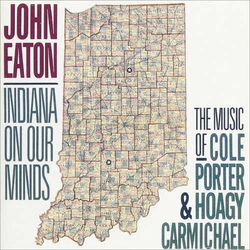
- Indiana in Our Memory: The Music of Cole Porter and Hoagy Carmichael (1989)
- John Eaton Presents the Music of Cole Porter (1990)
- Made in America (1996)
- Jazz Piano Portraits (1995)
- John Eaton at the Smithsonian (2000)
- The Romance of the American Songbook (2005)
- John Eaton Live at Blues Alley (2010)
- From Ragtime to Rock: A Musical Journey (2015)
Most Famous Performances
Although John Eaton is not a composer, his interpretations of jazz and American songbook classics have been celebrated for their sensitivity and depth. Among his most recognized renditions are:
Summertime
In this George Gershwin piece, Eaton avoids dramatics and opts for a restrained, contemplative reading. His phrasing is slow but never static, and each note seems suspended in air.
Night and Day
This Cole Porter standard, known for its harmonic sophistication, finds in Eaton an interpreter who avoids unnecessary ornamentation. His approach highlights the piece’s inner architecture, tonal contrasts, and melodic progression.
Ain’t Misbehavin’
The Fats Waller classic is performed with humor and rhythmic precision. Eaton plays it with both respect and playfulness — preserving the original swing while adding nuance and articulation that convey complicity with the listener.
Embraceable You
In “Embraceable You”, another Gershwin gem, Eaton turns the melody into an intimate dialogue. His harmonization is delicate yet firm, creating a version that forges a strong emotional bond with the audience.
John Eaton: The Interpreter Who Turned Jazz into Conversation — at Jazz Messenger Music
Listening to John Eaton is more than enjoying a talented pianist — it is connecting with a way of understanding music as living memory.
In a world where speed often dominates, his music offers a necessary pause.
At Jazz Messenger Music, you can explore his work with the attention it deserves — not just albums, but chapters of a story told through the piano, with intelligence, warmth, and a sincerity that needs no embellishment.